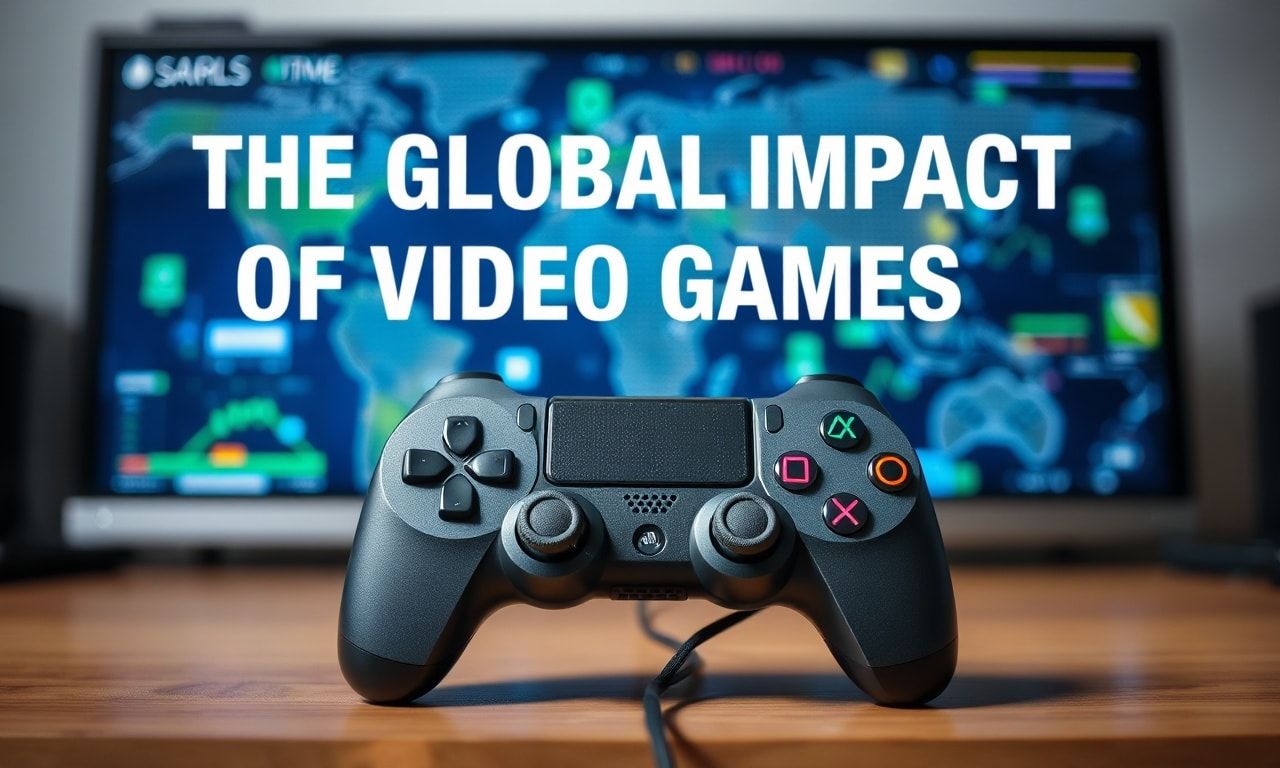
The Rise of Video Games as a Global Cultural Force
The video game industry has evolved from a niche hobby into a global cultural phenomenon, influencing entertainment, technology, and even social interactions. With the advent of high-speed internet and advanced gaming consoles, video games have transcended geographical boundaries, creating a universal language that connects millions of players worldwide. This article explores the multifaceted impact of video games on global culture and economies, highlighting their role as a significant force in modern society.
The Economic Powerhouse of the Gaming Industry
The economic impact of video games is staggering. According to recent reports, the global gaming market is worth over $159 billion, surpassing the film and music industries combined. This growth is driven by a diverse range of factors, including the rise of mobile gaming, the popularity of esports, and the increasing accessibility of gaming platforms. Countries like China, the United States, and Japan are at the forefront of this industry, contributing significantly to its economic success. For instance, China’s video game news and updates indicate a booming market with a growing number of gamers and innovative game developments.
The Cultural Influence of Video Games
Video games have become a powerful medium for storytelling and cultural expression. They offer immersive experiences that allow players to explore different worlds, historical periods, and social issues. Games like “The Last of Us” and “Red Dead Redemption 2” have been praised for their narrative depth and emotional impact, comparable to that of literature and cinema. Moreover, video games have fostered the creation of new communities and subcultures, where players share experiences, strategies, and even create user-generated content. This cultural influence extends to fashion, music, and art, as gaming aesthetics and themes increasingly permeate mainstream culture.
The Role of Esports in Global Competitions
Esports, or competitive video gaming, has emerged as a major sporting event, attracting millions of viewers and offering substantial prize pools. Tournaments like The International (Dota 2) and the League of Legends World Championship draw massive audiences, both online and in-person. These events have elevated gaming to the level of traditional sports, with professional players achieving celebrity status. The rise of esports has also led to the development of dedicated gaming arenas, sponsorship deals, and even academic scholarships for talented players. The global nature of esports has fostered international cooperation and competition, further cementing the role of video games in global culture.
The Future of Video Games: Trends and Innovations
The future of video games is bright, with several trends and innovations poised to shape the industry. Virtual reality (VR) and augmented reality (AR) technologies are enhancing the gaming experience, offering unprecedented levels of immersion. Cloud gaming services, such as Google Stadia and Xbox Cloud Gaming, are making high-quality gaming accessible to a broader audience. Additionally, the integration of artificial intelligence (AI) in game development is leading to more dynamic and personalized gaming experiences. As the industry continues to evolve, it is clear that video games will remain a significant cultural and economic force, influencing various aspects of modern life.
The Educational Potential of Video Games
Beyond entertainment, video games have significant educational potential. Educational games and simulations are being used in schools and universities to teach subjects ranging from history to science. These games make learning interactive and engaging, helping students to retain information more effectively. Furthermore, video games can develop critical thinking, problem-solving, and collaboration skills. As the educational value of video games becomes more widely recognized, their integration into formal education systems is likely to increase, further expanding their cultural impact.
The Social Impact of Gaming Communities
Gaming communities have become vital social hubs, providing platforms for individuals to connect, collaborate, and share experiences. Online multiplayer games like “Fortnite” and “Among Us” have brought people together from diverse backgrounds, fostering friendships and social interactions. These communities also serve as support networks, offering emotional and psychological benefits to their members. However, it is essential to address the challenges associated with online gaming, such as cyberbullying and addiction, to ensure that these communities remain safe and inclusive.