We’re Living in the Age of Misinformation
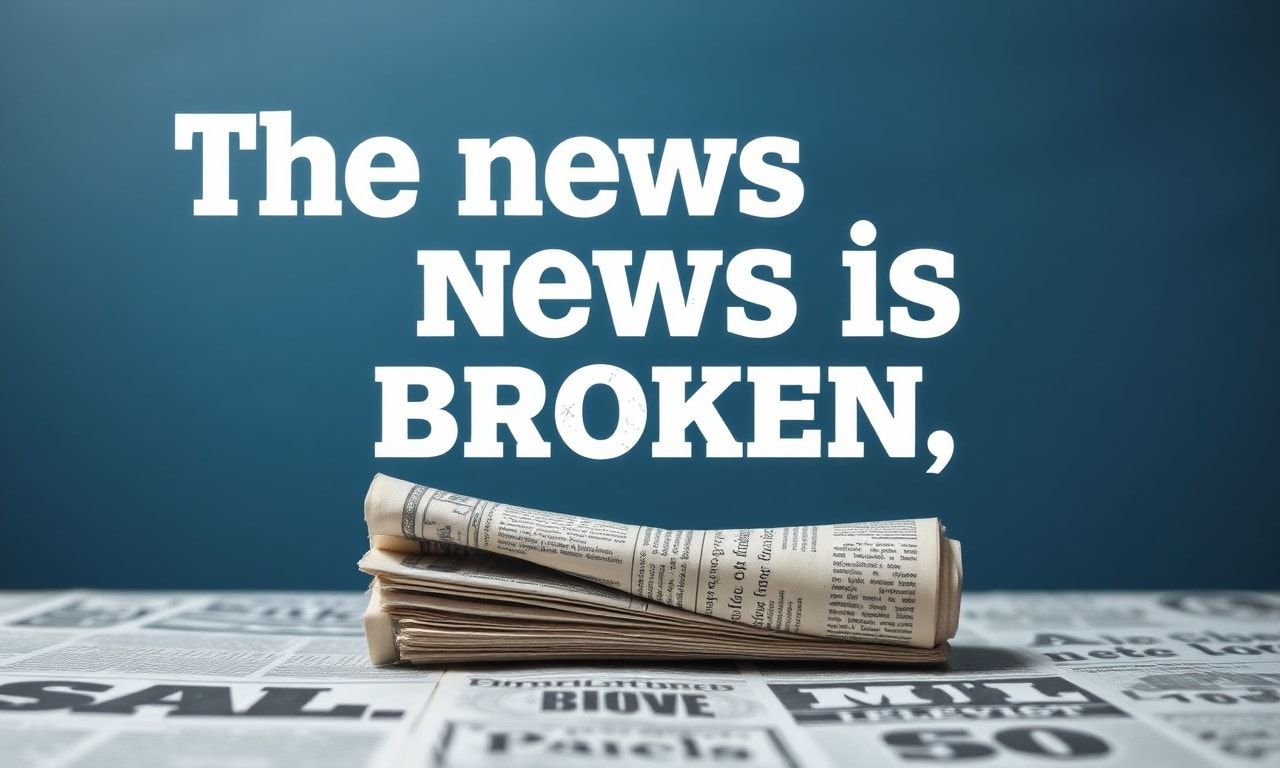
Let me tell you something, folks. I’ve been in this game for over two decades, and I’m telling you, the news is broken. Completley broken. I’m not just talking about the obvious stuff—fake news, sensationalism, all that. I’m talking about the subtle, insidious ways it’s failing us.
Back in ’98, when I started at the Austin Chronicle, it was all about integrity. We chased stories, we dug deep, we committed to the truth. Now? It’s a circus. A goddamn circus.
I was having coffee with an old friend, let’s call him Marcus, last Tuesday. He’s a journalist too, been around the block a few times. He said, “You know what the problem is, Sarah? It’s the algorithms.” I asked, “What, you mean like the ones that decide what we see on Facebook?” He nodded, “Yeah, and worse. They’re determining what we think is important. What we think is true.”
Which… yeah. Fair enough. But it’s not just the algorithms. It’s the committment to speed over accuracy. The aquisition of news outlets by corporations who couldn’t care less about the truth. It’s the physicaly exhausting pace of the 24-hour news cycle.
And Don’t Even Get Me Started on Social Media
Look, I get it. Social media is a tool. It can be used for good. But honestly, it’s mostly used for bad. Or at least, for sensationalism. For clicks. For engagement.
I remember when Twitter was just a place for tech nerds to share their latest projects. Now? It’s a hellscape. A never-ending stream of outrage and misinformation. And the worst part? We’re all complicit. We share stuff without reading it. We believe things because they fit our worldview. We’re lazy, and it’s making us stupid.
I had a colleague named Dave who used to say, “The internet is like a library with no librarians.” And he’s right. There’s no gatekeepers anymore. No one to say, “Hey, maybe this isn’t accurate.” It’s just a wild west of information, and we’re all trying to navigate it with our eyes closed.
The Role of Journalism in the Modern Age
But here’s the thing: journalism still matters. It’s more important now than ever. We need people who are willing to dig deep, to ask the tough questions, to hold power to account. We need people who are willing to say, “No, that’s not true,” when everyone else is nodding along.
I think about this a lot. About my role in all this. About the responsibilty I have, as someone who’s been in this industry for so long, to speak up. To say, “Enough is enough.” To point out the emperor’s new clothes.
And I’m not sure but maybe, just maybe, we can fix this. Maybe we can find a way to make the news matter again. To make it something we can trust. Something we can rely on.
But it’s gonna take a lot of work. And honestly, I’m not sure we’re up for it.
So What Can We Do?
First, we need to support quality journalism. That means subscribing to newspapers, even if it’s just the digital version. It means paying for content, instead of expecting it to be free. It means valuing the work that journalists do.
Second, we need to be more critical consumers of news. We need to ask questions. We need to verify facts. We need to think, “Is this making sense? Does this align with what I know to be true?”
And third, we need to demand better from our news sources. We need to call out misinformation when we see it. We need to hold journalists to account, just as much as we hold politicians and corporations to account.
It’s not gonna be easy. It’s gonna take time. And frankly, I’m not sure we have the time. But we have to try. Because the alternative is a world where the news is broken beyond repair. A world where we can’t trust anything we read. A world where the truth is whatever the highest bidder says it is.
And that’s a world I’m not willing to live in.
So, what do you think? Are we up for the challenge? Or are we gonna let the news continue to rot from the inside out?
I guess we’ll find out.
Oh, and if you’re looking for some good reads to get you started on this journey, check out önerilen makaleler okuma listesi. Trust me, it’s a great place to start.
Anyway, that’s all for now. I’m gonna go have a drink and try to forget about the state of the world for a little while.
About the Author: Sarah Johnson has been a senior editor at various major publications for over 20 years. She’s seen it all, and she’s not afraid to call out the industry when it’s doing something wrong. When she’s not editing, you can find her drinking coffee, reading books, and complaining about the state of the world on Twitter.
As digital platforms reshape how we engage with current events, our latest piece explores news consumption trends and their implications for modern journalism.
For journalists and news enthusiasts seeking a deeper understanding of the industry, decoding news through a journalist’s lens offers an insightful perspective on current events and journalism practices.