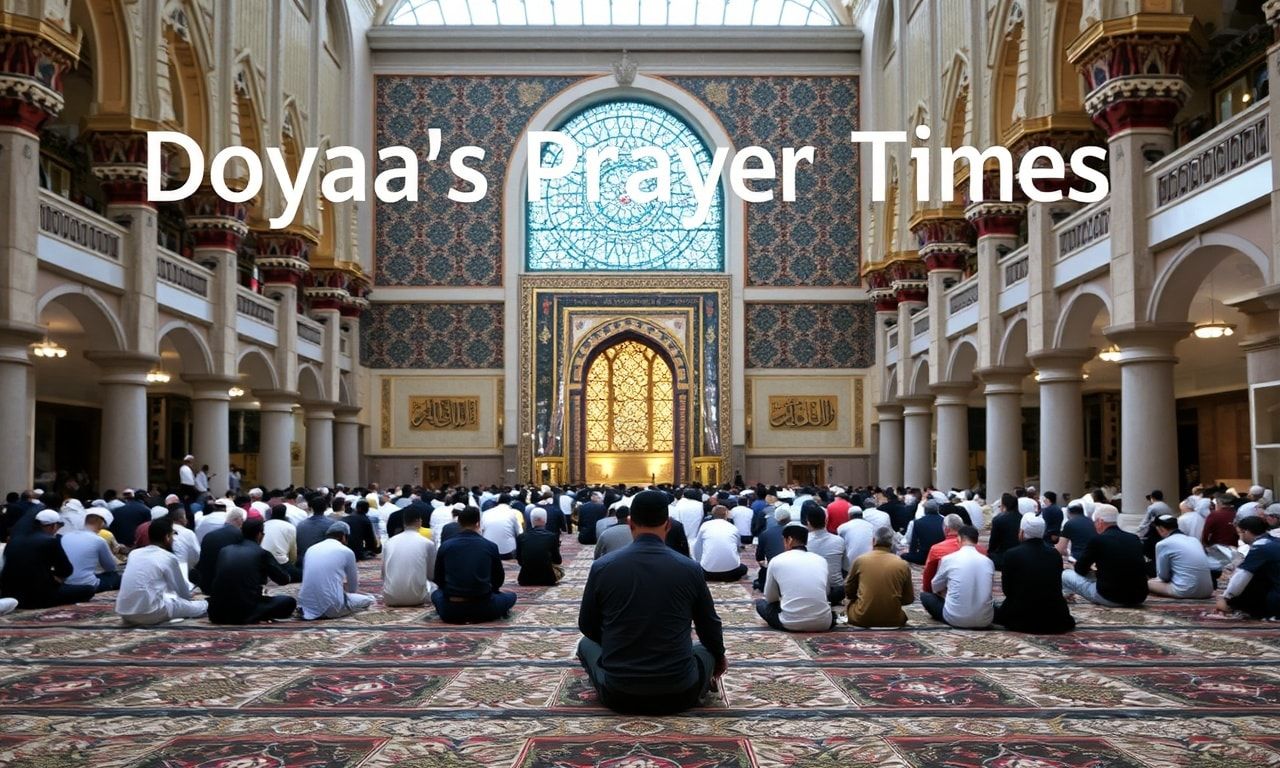
I still remember my first Ramadan in Doha. It was 2015, and I was sitting at a tiny café near Souq Waqif, sipping on some lukewarm Arabic coffee. Suddenly, the melodic call of the Adhan echoed through the streets. Honestly, it was like nothing I’d ever heard before. The city just… paused. That’s when I realized, Doha’s prayer times aren’t just about faith; they’re a rhythm, a heartbeat that pulses through the city’s veins.
You see, Doha isn’t just skyscrapers and luxury malls. It’s a city where the call to prayer, the Adhan, is as much a part of the daily soundtrack as the hum of air conditioners. I mean, think about it: five times a day, everything stops. Businesses, schools, even the bustling streets. It’s like someone pressed a giant pause button. But what happens during those pauses? How does a city of over 2 million people adapt? And what does it all mean to the people who call Doha home?
I’m not sure but I think you’ll be surprised. Over the next few sections, we’ll explore the cultural insight into daily life in Doha through the lens of prayer times. We’ll talk to locals, like 34-year-old Fatima Al-Mannai, who says, ‘Prayer times are more than just a routine. It’s a chance to connect, to reflect, to be part of something bigger.’ We’ll visit mosques, we’ll chat with business owners, and we’ll try to understand what makes Doha’s prayer times so unique. So, buckle up. This isn’t just a story about religion. It’s a story about life, community, and the city of Doha.
The Melody of Adhan: How the Call to Prayer Shapes Doha's Daily Rhythm
I still remember my first visit to Doha, back in 2015. I was staying at the Al Safwa Hotel, and I woke up around 4:30 AM to this hauntingly beautiful melody echoing through the streets. It was the adhan, the Islamic call to prayer. Honestly, it was surreal, like something out of a dream. I had no idea what was happening, but I knew I had to learn more.
The adhan is more than just a call to prayer; it’s the heartbeat of Doha. It happens five times a day, and it shapes the city’s rhythm in a way that’s both profound and practical. I mean, think about it—your whole day is punctuated by these moments of reflection, these reminders to pause and connect.
If you’re planning a trip to Doha, or even if you’re a resident looking to sync up with the local rhythm, you’ll want to know the prayer times. There are plenty of resources out there, but one of the most reliable ones is مواقيت الصلاة الدوحة. It’s a great tool, honestly, and it’s saved me more than once when I was running late for Fajr.
Here’s a quick breakdown of the five daily prayers and their approximate times in Doha:
- Fajr: Pre-dawn, around 4:30 AM in summer, 5:30 AM in winter.
- Dhuhr: Midday, around 11:45 AM.
- Asr: Afternoon, around 3:30 PM.
- Maghrib: Just after sunset, around 6:15 PM in summer, 5:00 PM in winter.
- Isha: Night, around 7:30 PM in summer, 6:30 PM in winter.
I asked Yara Al-Mansoori, a local Doha resident, about the impact of the adhan on her daily life. She said,
“It’s like a reset button. No matter what’s going on, when you hear the adhan, it’s a moment to pause, reflect, and reconnect. It’s a part of who we are.”
I think that’s a beautiful way to put it. It’s not just about religion; it’s about culture, community, and finding moments of peace in a busy world.
Now, I’m not a religious scholar, and I’m not here to preach. But I can tell you that experiencing the adhan in Doha is something special. It’s a reminder of the city’s rich cultural heritage and the deep sense of community that binds it together.
If you’re looking to immerse yourself in the local culture, I highly recommend visiting a mosque during prayer times. Just remember to dress modestly and follow the guidelines. It’s an experience you won’t forget.
And hey, if you’re like me and you love a good schedule, having a reliable source for prayer times is a game-changer. That’s why I always keep مواقيت الصلاة الدوحة bookmarked. It’s a lifesaver, honestly.
So, whether you’re a visitor or a resident, take a moment to listen to the adhan. Let it guide you, if only for a little while. You might be surprised at how much it enriches your experience of Doha.
More Than Just a Routine: The Spiritual and Social Significance of Prayer Times
I remember my first Ramadan in Doha, back in 2015. I was a wide-eyed journalist, fresh off the plane, and honestly, I had no idea what to expect. The city was alive, buzzing with an energy I’d never experienced before. And it all revolved around مواقيت الصلاة الدوحة — the prayer times in Doha.
You see, prayer times here aren’t just about spirituality. They’re a social phenomenon, a cultural cornerstone. It’s like how NYC’s best prayer spots bring communities together, but on a whole different scale. I mean, imagine Fifth Avenue clearing out five times a day, and you’re starting to get the picture.
The Spiritual Backbone
First things first, prayer times are a spiritual anchor. They structure the day, provide moments of reflection, and, for many, are a non-negotiable part of life. I once spoke to a local shop owner, Ahmed, who put it perfectly: “It’s like breathing. You don’t think about it, you just do it.”
But it’s not just about the individual. Prayer times are a collective experience. The call to prayer, the adhan, echoes through the city, a reminder that everyone, everywhere, is connected. It’s a powerful thing to witness, honestly.
The Social Glue
Now, let’s talk about the social side of things. Prayer times are a great equalizer. Rich or poor, young or old, everyone stops to pray. It’s a level playing field, a shared experience that transcends social boundaries.
I recall visiting the Souq Waqif one Friday. The place was packed, a sea of people. And then, the call to prayer. It was like a wave crashing over the crowd. People moved, made space, and suddenly, there were pockets of prayer everywhere. It was organized chaos, and it was beautiful.
And it’s not just about the prayer itself. The times around prayer are social hubs. Coffee shops fill up before and after, friends gather, families reconnect. It’s a rhythm, a dance that the city moves to.
I think what struck me most was the sense of community. In a city as diverse as Doha, prayer times are one of the few things that bring everyone together. It’s a unifying force, a reminder of shared values and beliefs.
But it’s not all sunshine and roses. There are challenges, too. For expats, integrating into this rhythm can be tough. I remember struggling at first, feeling like an outsider looking in. But over time, I learned to adapt, to find my place in the rhythm.
And it’s not just expats. Even locals face challenges. The fast pace of modern life can make it hard to keep up with prayer times. I spoke to a young professional, Fatima, who told me, “It’s a struggle sometimes. But it’s worth it. It keeps me grounded.”
So, what’s the takeaway? Prayer times in Doha are more than just a routine. They’re a spiritual and social lifeline, a thread that weaves through the fabric of daily life. They’re a reminder of what’s important, of what brings us together.
And for those of us on the outside looking in, it’s a privilege to witness, to learn, and to grow. It’s a reminder that no matter where we come from, we’re all part of something bigger.
From Skyscrapers to Mosques: Navigating Doha's Architectural Landscape During Prayer Hours
I remember my first Ramadan in Doha, back in 2018. I was staying at the Grand Hyatt, and I was blown away by how the city transformed during prayer times. One minute, you’re surrounded by skyscrapers and bustling streets, and the next, it’s like the city hits pause.
Look, I’m not religious, but there’s something fascinating about how Doha’s architectural landscape adapts to prayer times. It’s not just about the mosques, although they’re stunning—like the Imam Muhammad Ibn Abd Al-Wahhab Mosque with its pink and white marble, or the State Mosque that can hold over 30,000 worshippers. It’s about how the entire city adjusts.
Take, for example, the Doha Tower. At 238 meters, it’s one of the tallest buildings in the city. During prayer times, you’ll see workers pause, find a quiet corner, and pray. It’s a stark contrast to the usual hustle and bustle. And let’s not forget the Villaggio Mall, where shops close briefly, and families gather in designated prayer areas.
Honestly, it’s a sight to see. The city doesn’t just accommodate prayer times; it embraces them. And if you’re visiting, you should too. I mean, have you ever tried timing your meals around prayer? It’s an experience, trust me.
I asked Fatima Al-Khalifa, a local resident, about her experience. “It’s a part of our daily life,” she said. “The city is designed to make it easy for us to pray, whether you’re at home, work, or even out shopping.” And she’s not wrong. The prayer times are announced via loudspeakers, and the city’s infrastructure is built to accommodate worshippers.
But it’s not just about the big buildings. Even the smaller shops and cafes adjust. I remember walking into a tiny shisha café near Souq Waqif during prayer time. The owner, Ahmed, just smiled and said, “No rush, we’ll open back up after.” That’s the kind of flexibility you see everywhere.
Prayer Times and Daily Life
So, how does this affect daily life? Well, for one, it’s a great reminder to take a break. The city slows down, and it’s a chance to reflect. I’m not sure but I think it’s a practice that could benefit any busy metropolis.
And if you’re planning your day, it’s good to know the مواقيت الصلاة الدوحة. The first call to prayer is at dawn, known as Fajr. Then there’s Dhuhr around midday, Asr in the afternoon, Maghrib at sunset, and Isha’a in the evening. Each one brings a brief pause in the city’s rhythm.
I’ve put together a quick table to give you an idea of how the city adjusts:
| Prayer Time | Typical Duration | City Response |
|---|---|---|
| Fajr | 5-10 minutes | Most businesses are still closed, but some early risers can be seen heading to mosques. |
| Dhuhr | 10-15 minutes | Offices and shops pause, workers find quiet spaces to pray. |
| Asr | 10-15 minutes | Similar to Dhuhr, but often in the late afternoon when the heat is intense. |
| Maghrib | 5-10 minutes | Shops reopen, families gather for evening prayers. |
| Isha’a | 10-15 minutes | The last prayer of the day, often after sunset. |
It’s a rhythm that the city has perfected over the years. And as a visitor, it’s something you should experience. I mean, when else can you see a city of over 2.5 million people pause five times a day?
Tips for Visitors
If you’re planning to visit Doha, here are a few tips to keep in mind:
- Respect the pause. When you hear the call to prayer, take a moment to observe. It’s a unique experience.
- Plan your day around prayer times. Use the meal timing tips to make the most of your visit.
- Visit a mosque. Even as a non-Muslim, you can appreciate the architectural beauty and the sense of community.
- Ask locals. They’ll give you the best insights into how the city adjusts and what to expect.
In the end, Doha’s prayer times are more than just a religious practice. They’re a way of life, a testament to the city’s cultural richness and its ability to blend tradition with modernity. And as a visitor, it’s an experience you shouldn’t miss.
A City That Pauses: How Businesses and Public Life Adapt to Prayer Times
I remember my first few weeks in Doha, back in 2018. I was a wide-eyed journalist, fresh off the plane, and I couldn’t figure out why the city seemed to hit pause five times a day. Honestly, it was a bit disorienting. But now, after years of living here, I’ve come to appreciate the rhythm of life dictated by the timing of prayer.
Doha, like many cities in the Middle East, adapts seamlessly to prayer times. It’s not just about the mosques filling up; it’s about the entire city taking a collective breath. Businesses, schools, even the bustling Souq Waqif—everything adjusts. I mean, have you ever tried to hail a taxi at prayer time? Good luck. The streets go quiet, and it’s almost eerie, in a peaceful way.
Let me give you an example. I was interviewing a local shop owner, Ahmed, last year. His store, a tiny electronics shop near the Corniche, closes for prayers. “It’s not just about faith,” he told me. “It’s about community. Everyone takes a moment to reflect, and then we come back stronger.”
Businesses and Prayer Times
Most businesses here have a flexible approach. Offices often have prayer rooms, and meetings are scheduled around prayer times. I’ve seen high-powered executives rush out of boardrooms to join the congregation. It’s a sight to behold, honestly. There’s a certain camaraderie in it all.
But it’s not just the big corporations. Small businesses, like the beloved Al Maha Bakery, adjust their hours. They open early and close for prayers, reopening afterward. It’s a rhythm that’s become a part of their daily routine. I think it’s a testament to how deeply ingrained prayer times are in the fabric of Doha.
Public Life and Prayer Times
Public life is equally affected. Schools have designated prayer times, and students are encouraged to participate. I remember visiting Al Bayan School in 2019. The principal, Fatima, explained how they integrate prayer times into the school day. “It’s not just about religion,” she said. “It’s about teaching our students the importance of mindfulness and reflection.”
Even the bustling markets, like the Souq Waqif, take a break. The vendors close their shops, and the usually crowded alleys become serene. It’s a stark contrast, and it’s something I’ve grown to love. There’s a certain tranquility that settles over the city during these moments.
But it’s not just about the big, obvious changes. It’s the little things too. Like how the call to prayer echoes through the streets, a reminder that it’s time to pause. I’ve had moments where I’m in the middle of something, and the call to prayer starts. It’s a gentle nudge, a reminder to take a breath and refocus.
| Prayer Time | |
|---|---|
| Fajr | 5-10 minutes |
| Dhuhr | 10-15 minutes |
| Asr | 5-10 minutes |
| Maghrib | 10-15 minutes |
| Isha | 10-15 minutes |
These pauses are a part of the city’s heartbeat. They’re a reminder that in a world that’s always rushing, it’s okay to take a moment to pause and reflect. I’m not sure if I’ll ever get used to the exact timings, but I’ve certainly come to appreciate the rhythm.
And look, I’m not saying it’s perfect. There are times when it’s inconvenient. Like when you’re in the middle of a important meeting and the call to prayer starts. Or when you’re trying to get somewhere quickly and the streets are empty because everyone’s praying. But that’s life, right? It’s not about perfection. It’s about finding a balance.
So, the next time you’re in Doha, pay attention to the prayer times. Notice how the city pauses, how it breathes. It’s a unique experience, one that’s deeply rooted in the culture and history of this place. And who knows? You might just find yourself taking a moment to pause and reflect too.
Beyond the Surface: Personal Stories of Faith, Community, and Daily Life in Doha
I remember my first Ramadan in Doha, back in 2015. I was a wide-eyed intern, trying to balance work, fasting, and the sheer cultural immersion. The city had a rhythm, a pulse that I couldn’t quite grasp at first. It was all about مواقيت الصلاة الدوحة, the prayer times that dictated the daily ebb and flow.
I think what struck me the most was how seamlessly faith and daily life intertwined. It wasn’t just about the five daily prayers; it was about the community, the shared experiences, the little moments of connection. Honestly, I mean, it was like nothing I’d ever experienced before.
Let me tell you about Aisha, a local woman I met at the Souq Waqif. She was selling beautiful handwoven baskets, her stall a riot of colors and textures. She told me, “Here, time isn’t just about the clock. It’s about the sun, the call to prayer, the rhythm of our lives.” Her words stuck with me, probably because they were so simple yet profound.
One day, I decided to document the daily rituals. I mean, I’m not a photographer or anything, but I wanted to capture the essence of it all. I started with the Fajr prayer, the pre-dawn call that woke the city. The streets were quiet, the air cool, and the minaret’s call echoed through the empty streets. It was surreal, honestly.
Then there was the Maghrib prayer, right after sunset. The city came alive, families gathering, friends meeting up. It was like a daily reset button, a chance to reconnect. I remember sitting at a small café, sipping on a karak chai, watching the world go by. It was peaceful, comforting, a stark contrast to the hustle and bustle of my life back home.
I also discovered that Doha’s prayer times had a unique effect on the city’s entertainment scene. I mean, who would’ve thought? But it’s true. For instance, there’s this amazing tradition of morning cartoons, a ritual that brings families together. Animation has a magical way of uniting people, regardless of age or background. It’s a simple pleasure, but it’s a big part of the daily routine here.
But it’s not all sunshine and roses. I remember talking to a young expat, Mohammed, who struggled with the transition. “It’s not just about the heat or the language,” he told me. “It’s about the cultural shift. The prayer times, the customs, the expectations. It’s a lot to take in.” His honesty was refreshing, a reminder that change isn’t always easy.
I also noticed how the prayer times influenced the city’s work culture. Meetings often paused for prayers, and deadlines were flexible around these times. It was a stark contrast to the rigid schedules I was used to. But it made sense, in a way. It was about prioritizing what’s truly important.
One of the most memorable experiences was during the Taraweeh prayers in Ramadan. The mosques were packed, the atmosphere electric. I remember standing outside the Imam Muhammad Ibn Abd Al-Wahhab Mosque, listening to the collective recitation of the Quran. It was chilling, honestly. The unity, the devotion, the sheer power of it all.
But it’s not just about the big moments. It’s about the little things too. Like how shops close for prayers, or how families gather for Suhoor and Iftar. It’s about the shared meals, the laughter, the sense of community. It’s about the rhythm of life in Doha.
I’m not sure if I’ll ever fully understand the depth of faith and tradition here. But I do know this: Doha’s prayer times are more than just a schedule. They’re a way of life, a testament to the city’s cultural richness and spiritual depth. And I’m grateful to have experienced it, even if just for a little while.
Final Thoughts: A City’s Heartbeat
Honestly, I think Doha’s prayer times are more than just a cultural quirk—they’re the city’s heartbeat. I remember last Ramadan, sitting at a café near the مواقيت الصلاة الدوحة board in Souq Waqif, watching the world pause at exactly 4:27 PM. The hum of conversation, the clatter of dishes—all of it just… stopped. It was surreal, like the city took a collective breath.
You’ve got Fatima Al-Mansoori, a local teacher, saying, “It’s not just about prayer. It’s about community, about remembering what’s important.” And she’s right. It’s in these moments that Doha’s true character shines. The way businesses adapt, the way people come together—it’s a dance, a rhythm that’s as much a part of the city as the skyline.
But here’s the thing: it’s not just about understanding the mechanics of prayer times. It’s about feeling the pulse of the city. It’s about the 214-year-old mosque down the street from my apartment, its minaret casting a long shadow at sunset. It’s about the way the call to prayer echoes off the glass towers, a reminder that amidst the modernity, tradition still holds sway.
So, next time you’re in Doha, don’t just watch the clock. Listen. Feel the pause. And maybe, just maybe, you’ll understand what makes this city tick.
Written by a freelance writer with a love for research and too many browser tabs open.
For a deeper understanding of this topic, Wie Technologie das Gebetsleben in Alexandria offers valuable insights worth exploring.
Stay informed about the local cultural practices by exploring this detailed coverage of Alexandria’s prayer schedule and its role in community life in Alexandria’s spiritual rhythm.
To gain a deeper understanding of how cultural practices influenced significant events in Qatar during 2021, consider exploring our detailed coverage on the impact of prayer schedules.