








After 15:00 Putin will deliver an address to the citizens
Russian President Vladimir Putin for about 15 hours on Tuesday will appeal to the Russians. "Televised address Putin on the current situation; preliminary results of suppression of coronavirus, the prospects, the state of Affairs in the economy and about us in General", - said Dmitry Peskov.

Mishustin proposed to increase unemployment benefits for all Russians
Unemployment benefits should be increased for all Russians, not just for those who lost work because of the coronavirus, said Prime Minister of Russia Mikhail Mishustin during a meeting with the President of the Russian Federation.

Get to Know Tolami Benson: Bukayo Saka’s Girlfriend and Relationship Details
Bukayo Saka, the sensational England player, recently celebrated his team's victory over Switzerland with his girlfriend, Tolami Benson. Tolami Benson, aged 23, is one...

Barella: One of the Best Midfielders in the World New title:...
Nicolò Barella: Top Midfielder Worldwide Inter and Albania player Kristjan Asllani is looking forward to the EURO 2024 opening game, and he believes his club...

Allegory Examples: Literature, Film, Music (+ Definition)
Allegory Examples: Literature, Film, Music (+ Definition) As a writer, exploring allegory examples can open up a world of creativity and depth in storytelling. Allegories...

After the lifting of restrictions on European the streets of protesters
In France, for the first time after the partial lifting of restrictions on protests went out again "yellow jackets". To conventional requirements — social and economic — has now added a new. The demonstrators want the macron put more money into the health system.

How Caring for Your Dog Enhances Everyday Life
Owning a dog is more than just having a pet; it’s a lifestyle choice that influences health, routine, and overall happiness. As a veterinarian...

Ultimate Guide to Getting Sponsored on YouTube: Tips for Beginners
YouTube sponsorships are a key source of revenue for many YouTubers, offering more money than ads and being unaffected by demonetization. These collaborations allow...

13 Proven Strategies to Make Money Podcasting
Podcasting has become a popular and influential form of media, with thousands of podcasts attracting millions of listeners worldwide. If you are looking to...

Processed 80% of protocols for the adoption of amendments to the...
The Central election Commission at noon today will open an information center will present the preliminary results of voting on amendments to the Constitution. Already, 70 percent of the processed protocols.

Make Money Blogging: 7 Key Tips for Success
Ever wondered if tapping away at your keyboard can really pay the bills? Is it truly possible to make a living from blogging, or...

The Russian answer to the US withdrawal from the Treaty on...
Russia has a plan to respond to the American actions against the open skies Agreement.

The world’s oil is quickly becoming more expensive after the Committee...
Oil prices on the global markets quickly rises after the successful results of the past Thursday a meeting of the Ministerial monitoring Committee of OPEC+. Per day barrel of oil has risen more than a dollar.

The UN agreed with the criticism of Putin in its address
Published an article by Vladimir Putin. In particular, he noted in it that the UN now there is some tension, and organization is not such effective as could be. UN officials criticized Russian President agreed

Approaching Influencers in Your Niche: 12 Crucial Tips for Success
Do you want to connect with influencers in your niche? Most bloggers do. But many of them go about it the wrong way. Forming...

Why You Should Watch One of the Best TV Shows: A...
The best show on TV right now is "Interview with the Vampire" on AMC. It's a shame that many people are missing out on...

Thaci refused to stay in Washington
Kosovo leader Hashim Thaci refused to stay in Washington after spectaculator suspected him and the speaker of the Parliament of the unrecognized Republic of Kadri Veseli war crimes.

England Struggles at Euro 2024 Without Manchester United Star
England's performance at Euro 2024 has been a topic of discussion, with many pointing out that they are missing the presence of Manchester United...

In the Belarusian Belgazprombank has introduced a temporary administration
The national Bank of Belarus has introduced a temporary administration in JSC "Belgazprombank", which last 20 years was headed by former Vice-President of the country Victor Babariko.

Kicker Grenell still going to resign
The infamous US Ambassador to Germany Richard Grenell in the coming weeks going to leave this post. According to the German Agency DPA, his place may be temporarily appointed Robin Quinville, 2018 occupying the position of counselor at the U.S. Embassy in Berlin.
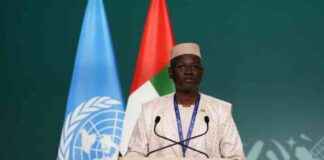
Mali Prime Minister Supports Critical Document on Junta
Mali's Prime Minister Choguel Kokalla Maiga has publicly criticized the country's military rulers, leading to the arrest of his ally Boubacar Traore for signing...

Lavrov and Shoigu are sent to the talks in Turkey
The Ministers of foreign Affairs and defence Sergei Lavrov and Sergei Shoigu on Sunday, June 14, to visit Turkey. The Ministers will arrive to Istanbul at the head of the interagency delegation of the Russian Federation to hold consultations on regional issues of mutual interest.

The Kremlin: the proposal of the trump of Russia to participate...
The idea of U.S. President Donald trump on reformatting of the G7 summit requires further negotiations through diplomatic channels to clarify the nuances of the proposal.

The summit of the Shanghai cooperation organisation moved
Russia decided to postpone a summit of the Shanghai cooperation organization (SCO), he could get closer to the fall.

Mishustin has chosen the development of the country while maintaining the...
The Prime Minister of the Russian Federation Mikhail Mishustin during a vote on amendments to the Constitution of Russia voted "for economic and social development of our country, preserve its history, traditions and values." About it the Prime Minister said after the vote.

In a preferential mortgage at 6.5 percent may include low-rises
The government will explore the possibility of expanding the program of preferential mortgage at 6.5%, said first Deputy Prime Minister Andrei Belousov during the meeting with representatives "Business Russia".

Walmart Canada’s Northernmost Store: Location, Services, and Impact
Walmart Canada's Yellowknife store has been serving the north for three decades. Located in the Northwest Territories, the store has less than 100 employees...

The state Department believes that Russia should “get out of the...
Russia should "get out of the Middle East" because it is "destructive role". This assistant Secretary of state David Schenker. According to him, is the cornerstone of Washington's policy all the last 45 years.

Discover the Best of Urban Life and Opportunities in Bristol
Bristol is a city that perfectly balances history, culture, and modern innovation, making it one of the UK’s most appealing urban centers. Famous for...

Trent Alexander-Arnold Liverpool Contract Talks Intensify After Successful £26m Deal
Adidas had a lot to celebrate after England's recent penalty shootout win over Switzerland, as two of their star players, Jude Bellingham and Trent...

Beginner’s Guide to Selling Information Products: Tips and Strategies for Success
Selling information products can be a lucrative way to monetize your knowledge and expertise online. With the booming eLearning industry and the convenience of...

France, Germany and Italy called for an end to fighting in...
France, Germany and Italy appealed to the parties to the conflict in Libya and the foreign players to immediately cease hostilities in the territory of the state.

Coronavirus is not terrible: the CEC approved the procedure of Internet...
To participate in voting on amendments to the Constitution of July 1, are going for almost 70 percent of Russians. This is evidenced by published opinion poll. However, some citizens can Express their views in electronic format. The procedure of voting via the Internet a few hours ago I approved the Central election Commission.

Scandal vaccine: Makron could not remain silent
Interesting processes taking place in Europe. On Europe Day, which is celebrated in the EU on 9 may, the leader of the French political party the National Association of marine Le Pen published an article that somehow slipped past first, so read it only recently.

The world Bank expects the economy to shrink Russia to 11-year...
Russia's GDP in 2020 will decrease by 6% to an 11-year low, according to a forecast by the world Bank. This baseline scenario coincides with the forecast Bank of Russia (a decrease by 4-6%), as forecast by the international rating Agency Fitch, and other economic organizations.


Primakov knows how to make Rossotrudnichestvo effective
Yevgeny Primakov, who became head of Rossotrudnichestvo, knows how to make the organization effective. There is a challenge there is an understanding of how to solve it, to make an effective structure, which will broadcast national values and interests and contribute to the solidarity of Russia. He declared it on air of TV channel "Russia 24".

Werdau – police in Saxony: a teenager with a Car and...
As a 16-Year-old, he of course had no driving licence, but he was under the influence of alcohol. 0,86 alcohol breath alcohol,...

Denmark was allowed to finish the construction “Nord stream-2”
The Europeans stepped up support for the gas pipeline project through the Baltic sea from Russia to Europe. Danish energy Agency (DEA) has authorized the company 2 the Nord Stream, the project operator, to build a gas pipeline "Nord stream 2" in the Danish waters by means of pipe-lay vessels with anchor positioning. In the end, the project enters the homestretch.

Sobyanin: the amendments do not mean that the President will be...
To the reign of the oligarchs amendments to the Constitution will not, assured the mayor of Moscow Sergey Sobjanin in interview to TV channel "Russia 24". "Frankly, we and the oligarchs remained, even any names so I do not know", - he added.

Top 11 Personal Branding Tips to Grow Your Following
There are several reasons why personal branding efforts may fail. Some common challenges include not getting started, posting content inconsistently, and not earning engagement...

Two employees of the Russian Embassy in the Czech Republic declared...
Two employees of the Russian Embassy in the Czech Republic declared persona non grata. This was told by Prime Minister Andrew Babish on Friday, June 5, for an emergency situation in Prague.

North Korea: talks with Washington will not
The foreign Ministry of the DPRK said that no negotiations on the phone with Washington will not. Central news Agency of North Korea reports this citing the head of the Department for USA Kwon Jung Keun.

Polls: participate in voting on amendments to the Constitution will take...
To vote on amendments to the Constitution are about 67% of Russians. This is evidenced by opinion poll. While 61% came to the polls intended to support all the proposed amendments, and 21% July 1, 2020 are going to vote against the amendments to the Basic law. A nationwide survey was conducted June 2, 2020.

Putin held talks with President of Kyrgyzstan
Vladimir Putin discussed by telephone with President of Kyrgyzstan Jeenbekov Sooronbai economic cooperation and Russian aid to Kyrgyzstan in the fight against coronavirus COVID-19.

Sobyanin announced the days of free Parking
On Saturday the mayor of Moscow Sergey Sobyanin said that Parking in the capital on 24 June and 1 July this year will be free.

Putin once again invited Lukashenka to Russia
Russian President Vladimir Putin invited his Belarusian counterpart Alexander Lukashenko at the opening ceremony of the memorial to Soviet soldiers. It will be held on 30 June Rzhev in the Tver region.

The US is trying to make China a scapegoat
When in China, I hear accusations from the US, we react in a tougher and tougher. Short but very scathing editorial published, the main newspaper of the country - the Central organ of the CPC Central Committee Renmin Ribao.

Directors of the Hong Kong riot is not even trying to...
Chinese President XI Jinping signed a decree on the entry into force on 30 June of the law on the protection of national security of Hong Kong. The document provides for creation on the territory of the Autonomous district power structures, subordinated to Beijing.

Five regions have applied for remote electronic voting on the Constitution
Five regions expect to the remote electronic vote in the nationwide voting on amendments to the Constitution. Centrizbirkom received applications from Moscow, St. Petersburg and Nizhny Novgorod region, and Krasnoyarsk region and Republic of Karelia.

Glastonbury Festival 2024: Opening Gates for Music Fans
The green gates to the Glastonbury Festival 2024 swung open as organiser Emily Eavis welcomed eager music fans onto the site. The festival, which...

The Russian government has extended a special tax regime for self-employed
The Russian government has extended a special tax regime for self-employed, said on Monday Mikhail Mishustin at the working meeting with Deputy Prime Ministers, which was broadcast channel "Russia 24".

Boost Your Writing Confidence with These 8 Easy Steps
Boosting Your Writing Confidence: 8 Practical Steps to Improve Your Blogging Skills No matter what your goals are for your blog - whether it's to...
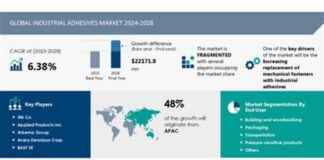
Industrial Adhesives Market size is set to grow by USD 22.17...
Industrial Adhesives Market to Witness Significant Growth by 2028 The global industrial adhesives market is projected to experience substantial growth, with an estimated increase of...

Ocon Signs Exclusive F1 Contract for 2025
Esteban Ocon, the French Formula 1 driver, will be leaving Alpine at the end of the current season. However, it seems like he has...

Biden: Misinformation is a major problem on social media platforms
President Joe Biden stated Friday that social media companies were "killing people" because they failed to check misinformation posted on their platforms regarding COVID-19...

Crafting Engaging LinkedIn Posts: A Step-by-Step Guide
Crafting Engaging LinkedIn Posts: A Step-by-Step Guide What sets apart an average LinkedIn post from a top-performing one that garners hundreds of likes and comments?...

Top 12 AI Writing Tools: Features and Differences
The world of AI writing tools is vast and ever-expanding, with numerous options available to assist writers in creating content more efficiently. In this...

Scots Fans Lose Luggage on Way to Euros: Stuck in Kilts...
Billy Maxton, 67, and Bob Burnett, 69, are two dedicated Scotland fans who found themselves in a bit of a wardrobe predicament during their...

Trump wants to create a Commission to assess bias in social...
American President Donald trump is thinking about creating a Commission to review complaints of bias against conservatives in social networks. The administration may also encourage similar audits by Federal regulatory agencies such as the Federal communications Commission and the Federal election Commission.

The Prime Minister of France resigned
The Prime Minister of France Edouard Philippe gave the President of the country, Emmanuel macron, the resignation, the President approved it.

CEC called the turnout in the referendum on the Constitution “very...
The Chairman of the Central election Commission of the Russian Federation, Ella Pamfilova called the turnout for the national vote on amending the Constitution is very decent.
7 Bold Ways to Write a Hook that Instantly Grabs Attention
Breaking News: Master the Art of Hook Writing to Instantly Captivate Your Audience In today's fast-paced world of information overload, it's crucial for writers to...

Top 17 AI Content Tools for Effective Content Creation and Marketing
Jasper: The All-in-One Writing and Content Creation Tool In the vast world of AI content tools, one tool stands out as a comprehensive solution for...

The President of Kyrgyzstan arrived in Moscow, but because of the...
Kyrgyz President Sooronbai Jeenbekov, arriving in Moscow, was unable to participate in the Victory Parade of his delegation had identified two cases of coronavirus COVID-19. Ill, Department head of the foreign policy of the President's office Daniyar Sydykov and a security officer.

Ukrainian Neptune called the missile with a steering machine
Member of the Federation Council of Russia Franz Klintsevich doubt the capabilities of the new Ukrainian rocket "Neptune". "The fact that the ballistic missiles they put servos, does not mean that they got cruise missiles", — he said.
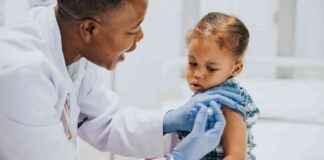
Understanding the Impact of Collective Amnesia on Virus Outbreaks
As we continue to see a resurgence of measles and other preventable diseases, it is essential to understand the impact of collective amnesia on...

Sanctions against the “Nord stream-2”: America seeks control over EU
If the sanctions against Syria Washington imposes in its sole discretion, that Iran has tried to enlist the support of the security Council. But in vain.

Patrushev: it is the United States was behind the Taliban movement
Russia has never cooperated with the Taliban (banned in Russia) and at the origin of the movement was the United States. This was stated by Secretary of the Russian security Council Nikolai Patrushev. He expressed the hope that American media will be more responsible approach to their publications and will not provoke further tensions between Moscow and Washington.

Putin congratulated Berdymukhamedov happy birthday
The President of Russia Vladimir Putin has congratulated his counterpart from Turkmenistan Gurbanguly Berdimuhamedov on his birthday. The heads of state had a telephone conversation.

Zakharova’s statement on defense strategy in Romania like Bucharest
The Ambassador of Russia in Romania, Valeri Kuzmin, was summoned on Friday, June 12, the foreign Ministry in connection with the statement of the official representative of the Russian foreign Ministry Maria Zakharova on the National defense strategy of Romania.

Mishustin: the spread of the coronavirus in Russia gives grounds for...
Statistics of the spread of coronavirus in Russia gives grounds for cautious optimism. This was stated by Prime Minister Mikhail Mishustin said at a meeting of the Presidium of the coordination Council for the fight against COVID-19.

Donald trump intends to invite Russia to the summit G7
The white house announced that the President of the United States Donald trump takes the summit of the group of seven ( G7) since the end of June to September of the current year and intends to invite Russia, South Korea, Australia and India.

Basic security: Jens Spahn rejected reform plans for Hartz IV
In the debate about the future of the basic backup Hartz IV, has expressed the Federal Minister of health, Jens Spahn (CDU)...

Michelle Obama Advises Daughters Against Politics, Says Barack
Barack Obama shared that his daughters, Malia and Sasha, are not interested in politics due to advice from their mother, Michelle Obama. During a...

Dragons set to table two-year deal for Rabbitohs hooker
The St George Illawarra Dragons are looking to sign former NSW hooker Damien Cook to a two-year deal, pending approval from South Sydney. Cook,...

Zelensky may be in the same boat with gorizontom Poroshenko
May 20 the President of Ukraine Vladimir Zelensky gave a press-conference dedicated to the anniversary of the inauguration. In contrast to the last - 14-hour - this press conference did not last long - only three hours, during which journalists had time to ask 22 times.

Media: Poroshenko has submitted to the court after the publication of...
After appeared in the media a secret recording of the conversation Poroshenko with the former Vice President of the United States Joe Biden, attorney General's office in Kiev opened a criminal case against the ex-President of Ukraine criminal case.

Live: Wall Street lifts but ASX opens lower
Financial Markets Update Content: The stock market indices on Wall Street have shown a positive trend, while the Australian Stock Exchange (ASX) has opened more...

Amendments to the Constitution: voting in the US passed without incident
Voting on amendments to the Constitution of the Russian Federation will put an end to attempts from abroad to tear off a piece of Russia. This was stated by our Ambassador to the USA Anatoly Antonov on the results of voting in the diplomatic mission.

Coronavirus, oil, G7, space: Putin and trump discussed a number of...
Russian President Vladimir Putin discussed in a telephone conversation with US President Donald trump a number of important topics.

China will increase in 2020 defence budget by 6.6%
Defense budget of China, the second largest in the world after the U.S., will grow in 2020, despite the economic downturn.

Pompeo acknowledged the need “to talk with the Russians”
The United States "must speak Russian", it is very important to interact more frequently with Russia, said at a press conference in Washington the US Secretary of state Mike Pompeo. Speaking about a possible invitation to Russia for the upcoming this year's summit "the big seven" in the United States, he said, the decision to accept President Donald trump.

In Washington called the “sloppy” publication NYT about Russia and the...
The white house released a statement in which the publication of the New York Times about Russia's ties with the Taliban are called "sloppy". Data in the publication, have neither trump, nor Pence, says the paper.

Mazzarri to Join Iranian Club Persepolis FC
Former Napoli coach Walter Mazzarri, who recently had a short and unsuccessful stint back at Napoli, is now set to take on a new...

LGBT, BLM and the scandal of Jesus: Americans believe in a...
In Moscow there is a new landmark. On the building of the American Embassy hung the rainbow flag of the LGBT community lesbian, gay, bisexual and transgender people.

Expenses of the budget of Russia it is planned to increase
The Russian government plans to increase expenditures of the Federal budget in 2020 to 1.8 trillion rubles, Prime Minister Mikhail Mishustin at the government meeting, which was broadcast channel "Russia 24".

To be indifferent to your life: 1 July, you can vote...
Online voting for amendments to the Constitution ended. To vote you can still at a polling station or at home. July 1 — last day for this.

Elon Musk wrote in Russian Rogozin on long-term cooperation
Elon Musk, CEO SpaseX, written in Russian, the General Director of "Roscosmos" that relies on "a mutually beneficial and prosperous long-term cooperation".

She compares Janet Armstrong with the Queen
Fullscreen again and again. Janet Armstrong (Claire Foy) to the heads of NASA to assert ©(c)Universal Pictures On 21 July 1969...

Amendments to the Constitution: in Chukotka voted early more than 200...
In early voting on amendments to the Constitution already adopted by thousands of Russians.

Merkel does not “see the obvious”, says HEMPEL
Refusing to accept the will of the Crimean people, German Chancellor Angela Merkel for six years "knowingly't see the obvious". This was stated by the head of Committee of the Crimean Parliament on public diplomacy and international relations Yuriy gempel.

Beginner’s Guide to CJ Affiliate Program: Everything You Need to Know
CJ Affiliate: The Ultimate Guide for Beginners If you’re considering joining the CJ Affiliate program, you’re probably filled with questions and uncertainties. What payment methods...

Cullinan – the SUV of Rolls-Royce of the Lord is hovering...
Rolls-Royce and an SUV – that's not the point! Long Rolls-Royce parent company, BMW graced to build a off-roader with the Spirit...

The US economy is undergoing a crisis since the great depression
The US economy in the first quarter of 2020 decreased by 5% compared to the same period last year, according to Thursday's final, the Ministry of Commerce of the United States. And the expected deterioration of the situation.

Palestinian Ambassador Abdel Hafiz Nofal: we no longer believe that America...
Palestine hopes for Russia's help in resolving new tension in relations with Israel. About this program the "Global conversation," said the Ambassador of this state in Moscow Abdel Hafiz Nofal. Our country, the UN, the EU and the US constitute the so-called Quartet of international mediators in the negotiations between tel Aviv and Ramallah.

Ella Pamfilova: the vote passed with dignity and under the supervision...
"Everything was done to ensure that voting went very worthy. It was worthy. We coped with this very difficult task. Standing barely alive, but happy!", said the TV channel "Russia 1" the Chairman of the Central election Commission of the Russian Federation, Ella Pamfilova, commenting on the results of the last voting on amendments to the Constitution of the Russian Federation.

Just one question: the CEC has submitted a ballot for voting...
The Central election Commission of the Russian Federation presented the sample ballot for amendments to the Constitution. Citizens will have to answer only one question: "do You approve the amendments to the Constitution of the Russian Federation?".

How to Make Your Content Accessible: 8 Essential Tips
Creating Accessible Content: Essential Tips for Marketers In today's digital age, creating content that is accessible to all is not just a best practice, but...

Trailing Through Taiwan’s Vibrant Cities
Exploring Taiwan's Rich Culture and Scenic Beauty "The foot was relaxed. The human was happy too." There is something unarguably lost in translation, but this...

61 Proven Blog Post Ideas for Increased Traffic in 2024
Are you looking for some fresh and proven blog post ideas to boost your website traffic in 2024? As a seasoned blogger with over...

Germany will support the “Nord stream-2” despite new US sanctions
The US plans to expand sanctions against the "Nord stream — 2" is not changed the opinion of the German government about the need to continue the project, said Tuesday the foreign Minister of Germany Heiko Maas in a joint press conference with Polish Minister of foreign Affairs Jacek Czaputowicz.

Not long ago the US celebrated the independence Day with such...
244 years ago, his proclaimed the independence of the United States, at the head of which was General George Washington (in Russia it is accepted to speak Washington).

In the US, you may receive the 51st state
In the United States it took a surprising vote in the Congress about whether or not to change district of Columbia (i.e. Washington), in 51st state, where we elect senators and congressmen.

Coronavirus brought Scandinavia to the double standards
Sweden is investigating its own controversial approach to combating the pandemic coronavirus. The government has formed a special Commission. She will appreciate the steps taken by the authorities to contain the virus. The verdict should be submitted in February 2022.

Pushkov did not find “any basis” to invite Zelensky at the...
Senator Alexei Pushkov commented in his Twitter the decision not to invite the President of Ukraine to the Victory parade in Moscow. He wrote that the invitation of Vladimir Zelensky was not "no reason". Pushkov suggested that in the case of sending invitations to Zelensky, it 100% would be rejected.

‘I won a Rugby World Cup with Dan Carter – this...
Sonny Bill Williams, a rugby legend from New Zealand, recently shared his thoughts on the greatest rugby players he has played alongside or against....

After Zakharova Bloomberg changed “creepy” is the title of the article...
After the official comment of the representative of the Russian foreign Ministry Maria Zakharova Bloomberg renamed the material on mortality from COVID-19 in Russia.

Trump was diagnosed with Americans have symptoms of “leftist revolution”
U.S. President Donald trump has accused supporters of the left movement in the intention to erase the country's history and to desecrate the memory of national heroes.

Trump will restrict work visas for RecordNow unemployment
The President of the United States Donald trump announced the introduction of new restrictions on work visas to reduce entering the country of foreign workers and specialists. But not all businesses agree with trump — the country lacks educated managers, employees and workers.

Trump has suspended certain work visas up to the end of...
The President of the United States Donald trump signed the Executive decree on suspension until the end of 2020 for the issuance of certain types of temporary work visas and the extension of restrictions on green cards.

The President almost always spends the night in the Kremlin
The President of Russia Vladimir Putin told that sometimes works in the Kremlin, before the second half or even to two o'clock in the morning. In this case, he stays the night in a specially equipped room. Putin admitted that he spends the night in the Kremlin often. "Almost always," said he.

Why king Leopold II became objectionable in Belgium
More recently, snow-white statue of king Leopold II in Antwerp were removed quietly and carefully. Drenched in red paint and then set on fire, it first took on the repair, but the place has not returned.

CEC: on the day of voting risks to the health of...
On the day of voting on amendments to the Constitution of the Russian Federation all the necessary requirements are fulfilled, so that any risks to the health of citizens was not. This was stated by the Chairman of the Central election Commission, Ella Pamfilova.

Best Online Transcription Jobs for Beginners in 2024
**Best Online Transcription Jobs for Beginners in 2024** Are you a proficient typist with a knack for writing? If so, online transcription jobs could be...

Frost answered “very strange statement” Stano
Called a fake member of the Federation Council of the Russian Federation Oleg Morozov, the statement of the official representative of the European Commission Peter Stano that the various sources from Russia allegedly contribute to the spread in the EU of conspiracy theories and misinformation about the coronavirus.

The family of the US mogul John McAfee was shocked by...
Spanish authorities claim that John McAfee was ordered to be autopsied by a judge. He was a gun-loving anti-virus pioneer, crypto promoter, and occasional...

Strasbourg : Macron began a long journey in the footsteps of...
The week Emmanuel Macron is a busy one. The head of State was found Sunday night in Strasbourg, his German counterpart Frank-Walter...

Putin instructed to issue one billion rubles for the protection of...
Russian President Vladimir Putin instructed the Ministry to allocate over 1 billion rubles for the purchase of personal protective equipment and disinfection of medical products for donation to volunteers, organizations of social service and health organizations.

In search of the individual’s dream job
What process has to go through Antonia here and how your apprenticeship has landed, in the following Interview. In addition, she shares valuable tips...